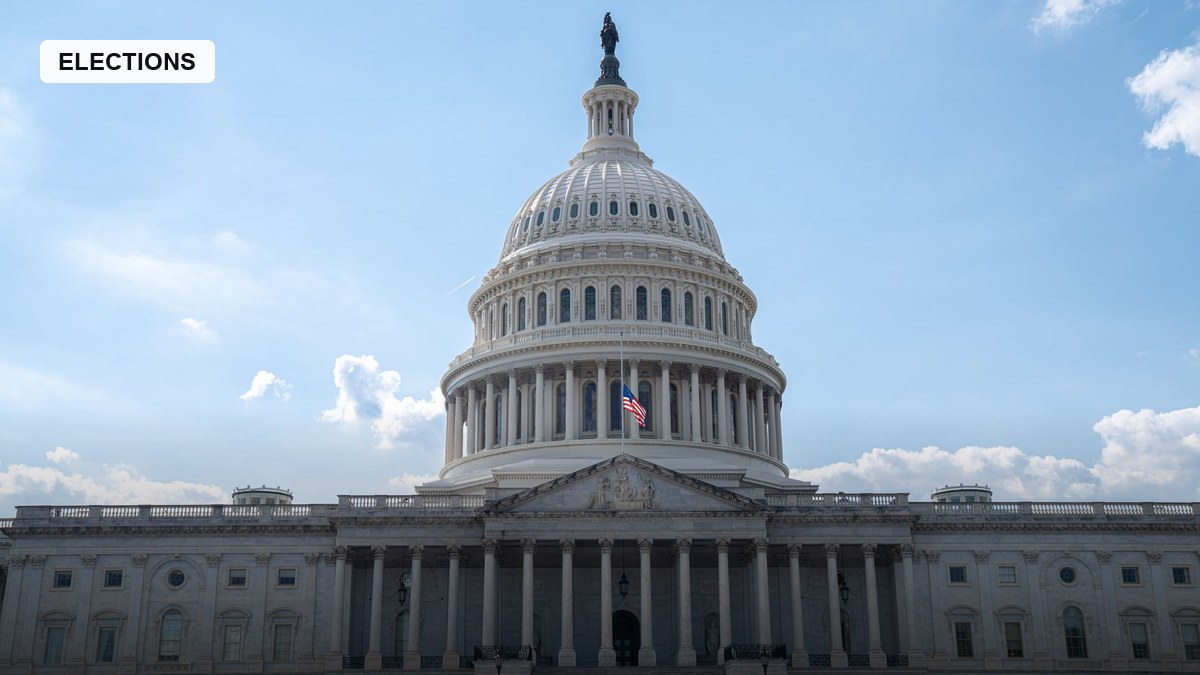
The House of Representatives passed the SAVE America Act, formally the Safeguard American Voter Eligibility Act, in a near party-line vote of 218-213, sending the Trump-backed elections bill to the Senate, where it has since stalled without a floor vote as the 2026 midterms approached. Representative Chip Roy of Texas led the legislation, which would require voters to present documentary proof of citizenship, such as a passport or birth certificate, in person to register for federal elections.
A Rare Bipartisan Defection
The House vote broke almost entirely along party lines, with Democratic Representative Henry Cuellar of Texas the lone member of his party to vote in favor, a split that underscores how polarizing the legislation has become even as its sponsors frame it as a straightforward election-integrity measure. Cuellar’s border-district constituency, which has featured prominently in broader debates over citizenship and voting, likely informed his departure from his party’s otherwise unified opposition.
The Disenfranchisement Argument
Critics, including a Brennan Center for Justice analysis cited in coverage of the bill, estimate that the documentary proof-of-citizenship requirement could potentially disenfranchise as many as 21 million eligible voters who lack ready access to a passport or birth certificate, whether due to cost, administrative burden, or simply never needing the documents for other purposes. Democratic lawmakers and voting rights groups have characterized the bill as a sweeping anti-voting measure dressed in integrity language, warning it would create new barriers disproportionately affecting married women who have changed their names, elderly voters and lower-income Americans.
A Second Attempt After 2025’s Failure
This is not the first time the House has passed similar legislation. A weaker predecessor version of the SAVE Act cleared the House in April 2025 before stalling in the Senate without ever receiving a vote, and the 2026 version represents Republicans’ second attempt at pushing citizenship-documentation requirements into federal law after that earlier effort went nowhere.
Senate Resistance From Within the GOP
Even within Republican ranks, the bill has encountered friction. Senator Susan Collins’s office signaled concerns that the current version goes “much broader” than the original principles behind the proof-of-citizenship concept, suggesting some Senate Republicans view the House-passed text as overreaching relative to a narrower, more targeted approach they might otherwise support. That internal GOP hesitation adds another obstacle beyond the near-certain Democratic filibuster the bill would need to overcome.
Democrats’ Filibuster Calculus
Senator John Fetterman, a Pennsylvania Democrat known for occasionally breaking with his party on other issues, said he does not expect any version of the SAVE Act to survive the Senate’s 60-vote filibuster threshold, a prediction that reflects the broader Democratic consensus that the bill lacks any realistic path to becoming law without bipartisan support that simply does not exist in the current Senate composition.
What’s Next
With the bill parked indefinitely in the Senate and midterm elections already underway under existing voter registration rules, the SAVE America Act’s practical effect on the 2026 cycle has been minimal regardless of its House passage. Its fate heading into 2027 will likely depend on whether Senate Republican leadership decides to force a vote to highlight Democratic opposition, or whether the legislation simply languishes as its 2025 predecessor did, with citizenship-documentation requirements for voting remaining a live flashpoint issue for future congressional sessions.
Photo: david hou / PEXELS via Pexels