The SAVE America Act, legislation that would require documentary proof of U.S. citizenship to register to vote and photo identification to cast a ballot in federal elections, passed the House of Representatives on February 11, 2026, by a narrow 218-213 party-line vote, but a scaled-down Senate version has since stalled well short of the 60 votes needed to overcome a filibuster.
What the Legislation Would Require
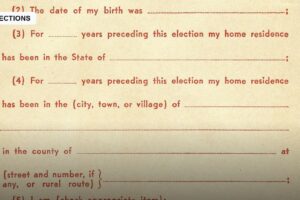
The SAVE America Act’s core provisions would impose documentary proof of citizenship requirements for federal voter registration and mandate photo identification at the polls nationwide, changes supporters argue are necessary to prevent noncitizen voting, despite extensive research showing such instances are exceedingly rare in U.S. elections. Critics, including voting rights organizations, argue the documentary proof requirement would disproportionately burden married women who have changed their names, low-income voters without easy access to underlying documents like birth certificates, and rural voters facing long travel distances to obtain required paperwork.
The Senate’s Procedural Roadblock
A scaled-down photo-identification-only version of the legislation, led by Senator Jon Husted, fell short in a 52-46 vote before the Senate’s summer recess, failing to reach the 60-vote threshold required to overcome a Democratic filibuster under current Senate rules. Senate Majority Leader John Thune has resisted pressure from within his own party to eliminate or weaken the filibuster specifically to pass the legislation, a position that has frustrated House Republicans eager to see the bill enacted before the midterms.
Alternative Legislative Strategies Being Pursued
House Republicans have pursued what Representative Clay Higgins’s office described as a three-track legislative strategy to route around the Senate’s filibuster roadblock, including attaching SAVE Act provisions to the annual defense authorization bill and instructing a budget reconciliation package, which requires only a simple majority, to incorporate elements of the legislation. These procedural maneuvers reflect the high priority House Republican leadership has placed on enacting the legislation despite the Senate’s structural obstacles.
Trump’s Continued Pressure Campaign
President Trump has publicly renewed pressure on Senate Republicans to pass the legislation, with an August 18, 2026, push urging swift action before the midterm elections, reflecting the White House’s view that voter identification requirements should be a signature priority heading into November. Democratic leaders have characterized the continued push as an attempt to suppress turnout among demographic groups more likely to face documentation barriers, a charge Republican sponsors reject as unfounded given the bill’s stated focus on citizenship verification rather than broader eligibility restrictions.
How the Fight Connects to Broader State Efforts
The federal legislative stalemate has coincided with a wave of state-level voter identification laws and ballot measures advancing independently, including Oklahoma’s successful constitutional amendment and West Virginia’s shift to requiring photo identification, suggesting that regardless of the federal bill’s fate, voter ID requirements are expanding incrementally at the state level across multiple 2026 legislative sessions and ballot initiatives.
How Advocacy Groups on Both Sides Are Mobilizing
Voting rights organizations opposed to the SAVE Act have launched public education campaigns warning eligible voters about the legislation’s potential effects should it eventually pass in some form, while groups supporting stricter voter identification requirements have continued pressing lawmakers through advertising and direct lobbying efforts aimed at Senate Republicans considered persuadable on filibuster rules. Both sides recognize that the legislation’s ultimate fate may be determined as much by the Senate’s institutional rules debate as by the underlying policy arguments for or against stricter voter identification, a dynamic that has frustrated advocates on both sides who would prefer the issue be decided on its substantive merits. Polling on voter identification requirements generally shows broad public support for the basic concept, even as specific implementation details like documentary proof of citizenship draw more divided responses when pollsters describe the requirement’s practical effects in detail.
What’s Next
With the Senate having recessed without passing the legislation and the midterm elections now weeks away, the SAVE America Act’s federal enactment before November 3 appears increasingly unlikely, though Republican leaders have signaled they may revisit the issue during a post-election lame-duck session or early in the next congressional term. State-level voter ID battles are expected to continue regardless of the federal legislation’s ultimate fate. Senate aides from both parties have said privately that the issue is unlikely to be fully resolved before the midterms regardless of further floor votes, leaving the matter likely to carry over into the next Congress.
Photo: New York Senate Photo / BY via flickr