A long-running challenge to North Dakota’s state legislative map brought by the Turtle Mountain Band of Chippewa Indians and the Spirit Lake Tribe remains stuck in legal limbo heading into the end of 2026, with the case’s fate now tied to a separate Supreme Court fight over whether private citizens and civil rights groups may even sue under Section 2 of the Voting Rights Act. Justice Brett Kavanaugh’s temporary stay of an Eighth Circuit ruling against the tribes, issued more than a year ago, has still not been lifted. The two tribes together represent roughly 30,000 enrolled members in north-central North Dakota, a population large enough to influence the outcome of two or three state legislative districts if drawn as a cohesive voting bloc.
How the case got stuck
The dispute dates back to a 2021 map that the tribes argued diluted Native American voting power by splitting their communities across multiple legislative districts. A federal district court initially agreed and ordered new districts drawn, but a divided Eighth Circuit panel ruled 2-1 that Section 2 does not give private parties, as opposed to the Justice Department itself, the right to sue at all. That procedural question, rather than the merits of the tribes’ discrimination claim, is what has frozen the case. The district court’s original 2023 ruling had found that the existing map diluted Native American votes enough to violate Section 2, a finding the Eighth Circuit panel never directly disturbed before pivoting to the standing question instead.
The Louisiana case casts a long shadow
The Eighth Circuit’s private-right-of-action question overlaps directly with Louisiana v. Callais, a case the Supreme Court has been weighing that could reshape how Section 2 challenges are brought nationwide. Court watchers say that if the justices rule in Louisiana that only the federal government can enforce Section 2, the North Dakota case would be effectively mooted regardless of its underlying facts, since the tribes brought their claim as private plaintiffs rather than through the Justice Department.
Why North Dakota’s tribal nations say the stakes are high
Turtle Mountain and Spirit Lake leaders argue that without a private right of action, future redistricting disputes affecting Native American communities would depend entirely on whether a sitting administration’s Justice Department chooses to intervene, a discretionary call that can shift dramatically between administrations. Tribal attorneys point out that the Justice Department has brought only a handful of Section 2 suits nationwide in recent years, compared to dozens filed by private plaintiffs and advocacy groups. Tribal leaders involved in the litigation have described the case as existential for their ability to ever challenge a map in court without first securing federal cooperation.
State officials defend the status quo
North Dakota’s secretary of state’s office has maintained throughout the litigation that its map complies with federal law and that the plaintiffs’ statistical analysis overstated the degree of vote dilution. State attorneys have also argued that redrawing districts this close to the 2026 election cycle, now effectively concluded, would have created confusion for voters and local election administrators who have already adjusted to existing precinct lines. North Dakota’s secretary of state has also noted that the state’s legislative map was last redrawn following the 2020 census and has not been challenged in any other lawsuit, framing the tribal case as an outlier rather than part of a broader pattern.
A pattern repeating across several states
North Dakota’s case is one of several Section 2 disputes, including ongoing litigation in Texas, Alabama, and Tennessee, where the underlying legal question of who can sue has become as consequential as the redistricting claims themselves. Civil rights organizations including the ACLU and the Native American Rights Fund have filed briefs urging the Supreme Court to preserve the private right of action, warning that its elimination would gut enforcement of the Voting Rights Act in states where the Justice Department has shown little appetite for bringing cases.
What comes next
With no ruling yet in Louisiana v. Callais, Kavanaugh’s stay is expected to remain in place into 2027, leaving North Dakota’s current legislative map intact for the foreseeable future regardless of the tribes’ underlying discrimination claims. Attorneys for the tribes say they are preparing parallel arguments in case the Supreme Court narrows but does not eliminate private enforcement, while also exploring whether a future Justice Department could be persuaded to adopt their case directly. In the meantime, the current legislative map will govern at least one more North Dakota election cycle in 2028, meaning any remedy the tribes eventually win would arrive at least three election cycles after their initial 2022 filing.
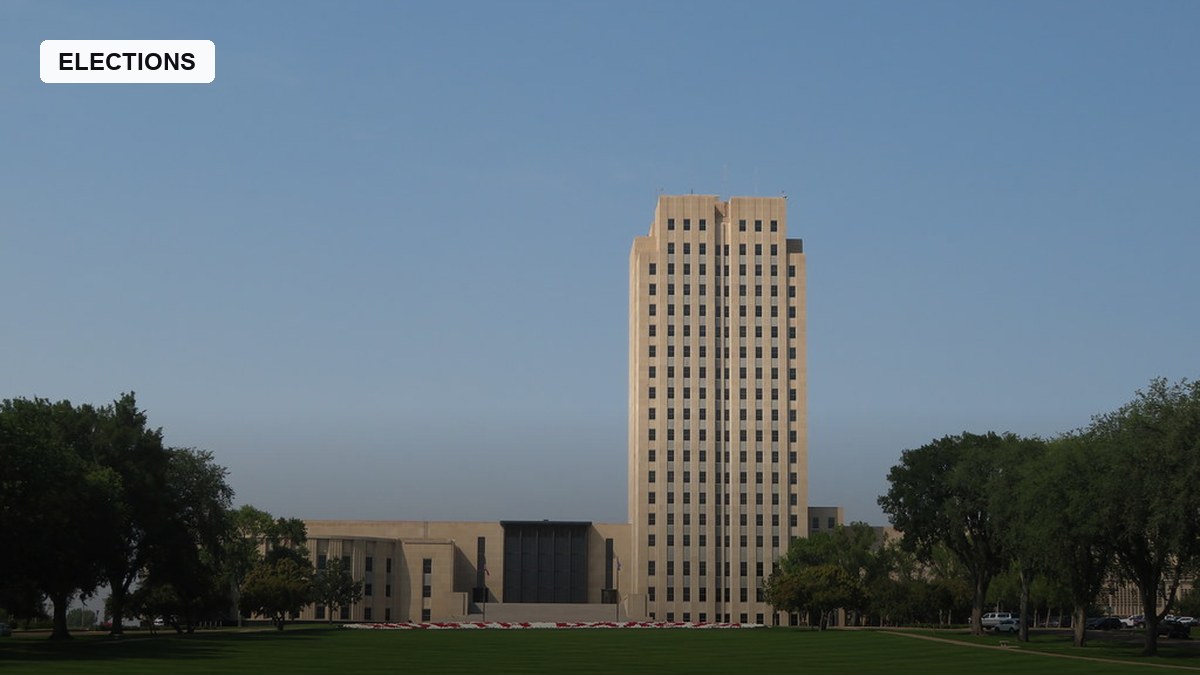
Photo: Ken Lund / BY-SA via flickr