Texas voters cast their 2026 midterm ballots under the state’s 2021 congressional map rather than the more aggressively Republican lines the legislature passed in 2025, after a federal court blocked the newer map and ordered the older version used while a lawsuit from the NAACP and other voting rights groups proceeds. That lawsuit, arguing the 2025 map illegally dilutes Black and Latino voting power, remains active even after the election it was meant to affect has come and gone. The 2025 map would have added as many as five additional Republican-leaning seats to Texas’s congressional delegation, part of a national GOP strategy to offset expected losses elsewhere in the 2026 midterms.
How Texas ended up voting on an old map
Texas Republicans redrew the state’s congressional districts in 2025 at the urging of the Trump White House, part of a broader mid-decade push to shore up the GOP’s narrow U.S. House majority ahead of the midterms. A federal panel ruled in November 2025 that the new map likely violated the Voting Rights Act and ordered the state to revert to its 2021 lines for the 2026 election, a decision Texas’s Republican attorney general unsuccessfully appealed. The panel’s ruling meant Texas candidates had to file for office and campaign under district lines that had already been in place for two prior election cycles, even as the legal fight over the newer map continued in the background.
What the lawsuit alleges
The NAACP Legal Defense Fund and allied groups argue the 2025 map packed Black and Latino voters into a smaller number of districts while spreading others thin enough to dilute their influence in several fast-growing suburban districts around Houston, Dallas, and Austin. Plaintiffs point to specific precinct-level changes they say had no justification other than reducing the voting power of minority communities who had been trending toward electing their preferred candidates under the 2021 lines. Plaintiffs’ expert analysis, filed with the court, compared precinct-level demographic shifts between the 2021 and 2025 maps and found that several districts saw their share of Black and Latino eligible voters drop by more than ten percentage points under the newer lines.
Texas’s defense
State attorneys have countered that redistricting is inherently a political exercise and that the legislature is entitled to redraw districts to its political advantage as long as race is not the predominant factor, arguing the plaintiffs have not proven racial intent rather than ordinary partisan line-drawing. The state has also leaned on the Supreme Court’s recent posture in Louisiana v. Callais, which could raise the bar for proving Section 2 violations nationwide, as grounds to seek dismissal of the Texas case outright. Texas’s solicitor general has also argued that population growth in the state’s suburban counties justified significant line changes regardless of any incidental effect on minority voting blocs.
A case that outlived its own election
Because the litigation was not resolved before Election Day, Texas becomes one of several states, along with Missouri and North Dakota, where redistricting fights continued into and past the midterms without a final resolution. Legal analysts say this pattern, lawsuits filed too late to affect the election they target but too significant to drop, has become increasingly common as mid-decade redistricting pushes multiply across Republican-controlled legislatures.
Two sides, two different stakes
Voting rights advocates say winning the case now still matters because any new map adopted would apply to the 2028 election and could set precedent limiting future mid-decade redraws nationally. Texas Republican officials counter that a prolonged court fight creates uncertainty for incumbents and challengers alike who need to know their district lines well before filing deadlines open for the next cycle, and they argue the 2021 map already satisfies federal requirements.
What happens next
A federal trial on the merits of the NAACP’s claims is expected in the coming months, with both sides signaling they will appeal an adverse ruling all the way to the Supreme Court if necessary. Whatever the outcome, Texas election officials say they need clarity well before 2028 candidate filing periods begin, making an expedited ruling likely regardless of which way the court leans. Secretaries of state in neighboring states are also watching the case closely, since a ruling narrowing Section 2 protections in Texas could influence how aggressively other Republican-controlled legislatures pursue mid-decade redraws of their own before the next census.
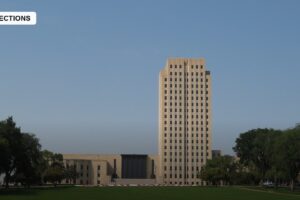
Photo: USA-Reiseblogger / PIXABAY via Pixabay