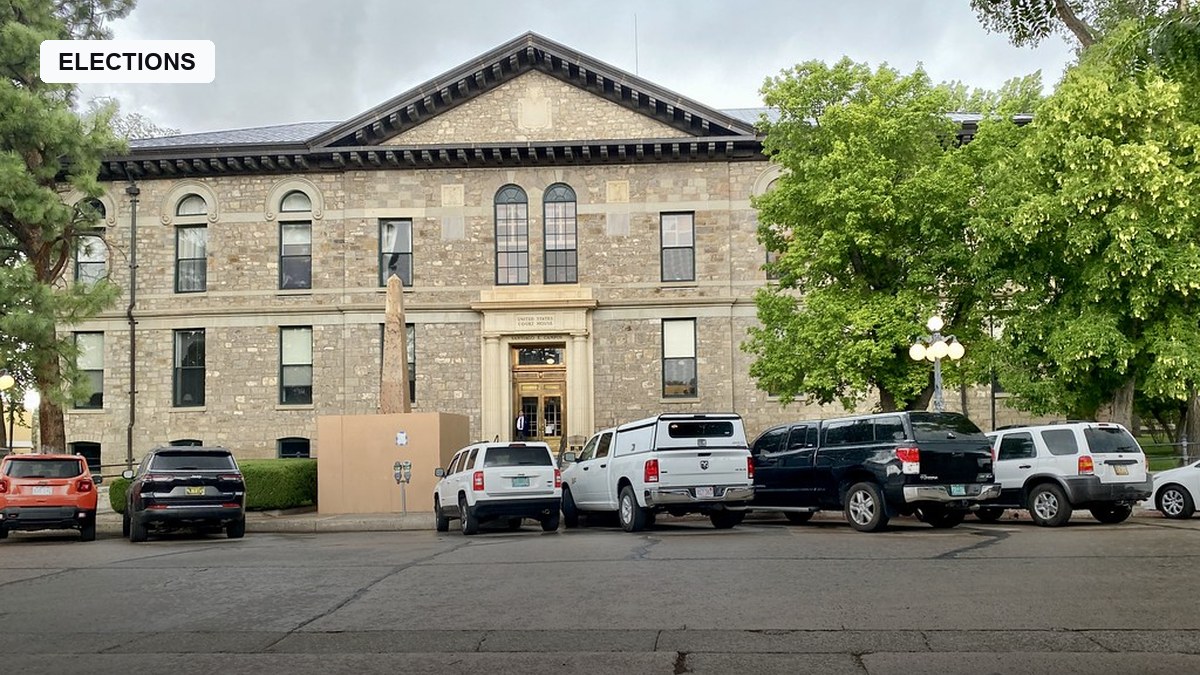
Denver has become the first major U.S. city to sue the federal government over the prospect of armed immigration agents stationed at polling places, a legal fight that landed in federal court just weeks before the November midterms. The lawsuit, filed Thursday in U.S. District Court, pairs the city with three national civil rights organizations — the League of United Latin American Citizens, Common Cause, and UnidosUS — against the Department of Homeland Security, DHS Secretary Markwayne Mullin, U.S. Immigration and Customs Enforcement, and Acting ICE Director David Venturella.
A Civil War-Era Law at the Center of the Fight
The complaint leans on 18 U.S.C. § 592, a statute dating to the aftermath of the Civil War that bars federal officials from stationing troops or armed personnel to “keep the peace at the polls” during an election. Denver’s lawyers argue that deploying ICE agents to voting sites would violate that prohibition outright, regardless of the administration’s stated rationale. The law was written specifically to prevent federal force from shaping the outcome of elections, and plaintiffs say its logic applies just as forcefully to immigration agents in 2026 as it did to soldiers in the 1870s.
Citing Incidents in Texas, California and New York
The lawsuit doesn’t rest on hypotheticals. It points to prior ICE enforcement activity near polling places in Texas, California and New York, and cites a ProPublica investigation that documented more than 170 U.S. citizens detained by ICE nationwide — evidence, the plaintiffs say, that mistaken or overzealous enforcement is a real and recurring risk, not a remote one. Closer to home, the complaint references a Colorado county sheriff’s office that has cooperated with ICE on warrant checks at voting locations, a practice Denver officials say has already chilled turnout in immigrant communities during earlier elections this cycle.
Denver’s Mayor and Clerk Draw a Hard Line
Denver Mayor Mike Johnston did not mince words after the filing. “That’s not something we should tolerate here in Denver. We won’t tolerate it,” he said. Denver Clerk and Recorder Paul López was equally blunt about what the city plans to do if federal agents show up at a polling site on Election Day: “If they show up — which is illegal — we will ask them to leave.” Both officials framed the lawsuit as a preemptive strike, seeking a court order before Election Day rather than a legal response after voters have already been intimidated away from the polls.
DHS Pushes Back, Denies a Formal Policy
A DHS spokesperson rejected the characterization that the department has adopted any coordinated “Polling Place Policy” targeting voting sites in Denver or elsewhere. The agency said ICE’s presence near any polling location would only follow from “intelligence-driven targeted enforcement,” and that agents could make an arrest only if “an active public safety threat endangered a polling location.” DHS did not directly address the incidents cited in the lawsuit or say whether it would commit to keeping agents away from voting sites through the midterms.
What the Plaintiffs Are Asking the Court to Do
Denver and its co-plaintiffs are seeking two things: a judicial declaration that stationing armed federal agents at or near polling places is unlawful under Section 592, and an injunction blocking the administration from implementing any such deployment before the November election. Civil rights groups involved in the case argue that even the perception of ICE activity near a polling site can suppress turnout among naturalized citizens and Latino voters, an effect they say is functionally indistinguishable from voter intimidation regardless of DHS’s stated intent.
A Test Case for the Midterms
The Denver case arrives amid a broader wave of litigation over federal involvement in the 2026 midterms, but it is among the first to target ICE specifically rather than other federal agencies. How quickly the court moves — and whether it grants an injunction before ballots are cast in November — could set a precedent other cities weighing similar legal action are watching closely. For now, Denver’s clerk has made clear the city intends to treat any attempted ICE presence at its polling places as a legal violation to be challenged on the spot, setting up the possibility of an on-the-ground confrontation even before the litigation is resolved.
Photo: w_lemay / BY-SA via flickr