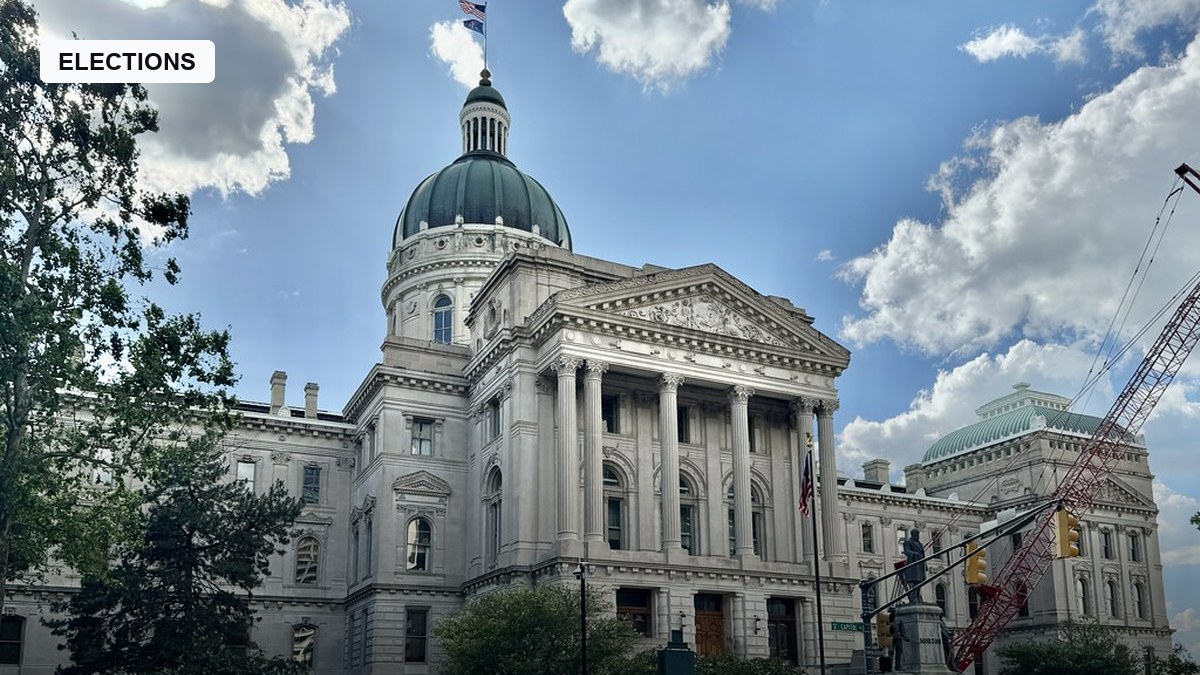
President Trump removed the last remaining commissioners of the U.S. Election Assistance Commission in early July 2026, leaving the small bipartisan federal agency with zero sitting commissioners and, as a result, unable to legally conduct official business just months before the November midterms.
Who Was Removed
The commissioners forced out were Thomas Hicks, a Democrat who chaired the agency, and Benjamin Hovland, also a Democrat, according to Votebeat’s reporting. Republican commissioner Christy McCormick was permitted to resign rather than be formally fired. A fourth commissioner, Donald Palmer, had already departed earlier in 2026, meaning the four-member commission had already been operating short-staffed before the July purge eliminated it entirely.
What the EAC Actually Does
The EAC is a small but consequential agency: it distributes federal election-administration funding to states, maintains the national mail voter-registration form used across the country, and runs the federal certification program that tests and approves voting machines and tabulation systems before they can be used in federal elections. With no commissioners in place, the agency cannot vote to approve certifications, change the national registration form, or authorize new guidance — leaving those functions frozen at whatever state they were in as of July 2026.
The White House’s Justification
A White House official defended the move by saying, “The President reserves the right to remove individuals that may not be totally aligned with securing America’s elections,” tying the action to the administration’s broader argument that federal election oversight needed to be brought more directly under executive control.
An Unsettled Legal Question
Election law professor Rick Hasen described it as “an open question” whether a recent Supreme Court ruling expanding presidential removal power over independent agency heads actually extends to a body like the EAC, which Congress designed specifically to be bipartisan, with commissioners historically serving fixed terms regardless of which party controls the White House. That ambiguity means the firings could eventually be challenged in court, but no such lawsuit had produced a ruling reinstating the commissioners as of mid-September.
What It Means With No One at the Wheel
Practically, the vacancy freezes the EAC in place through the midterms: it cannot change voting-system certification standards or alter the federal voter-registration form, which cuts both ways — it prevents administration allies from pushing through contested changes like added proof-of-citizenship requirements, but it also means states waiting on routine certification updates or guidance have nowhere to turn. Election administrators and voting rights groups say the more consequential fight will be over who Trump nominates to refill the commission and whether the Senate confirms replacements before the agency’s paralysis starts affecting 2028 planning, since EAC guidance and certification work typically operates years ahead of any single election.
A Bipartisan Design Now Under Strain
Congress created the EAC in 2002 specifically as a four-member commission split evenly between the two parties, with no more than two commissioners from any single party, precisely to prevent the kind of unilateral executive control over election administration that critics say the July firings now represent. That structural design had, until this year, survived multiple changes in presidential administration without a full vacancy, making the current situation, in which the agency has no commissioners of either party, unprecedented in the commission’s roughly two-decade history.
State election directors who rely on the EAC’s Voluntary Voting System Guidelines to get new tabulation equipment certified say pending applications are now stuck in limbo, since only sitting commissioners can formally approve certification decisions. Some jurisdictions that had planned equipment upgrades ahead of the midterms have instead had to continue using older, already-certified systems, a workaround that avoids immediate disruption but leaves longer-term modernization plans on hold until the commission is restored to a working quorum. Smaller counties, which typically lack in-house legal staff to interpret the certification backlog’s practical implications, say they are relying on state associations of county clerks to relay guidance about which older systems remain safe to use through November, adding an extra layer of uncertainty to preparations that would normally be routine.
Photo: w_lemay / BY-SA via flickr