With less than two weeks until Election Day on November 3, Decision Desk HQ gives Democrats a 78% chance of winning the House and a 56% chance of controlling the Senate, while prediction market Kalshi shows traders even more bullish on Democratic chances at 91% for the House and 65% for the Senate, as Republicans defend their current 53-47 Senate majority against a map that has shifted more competitive than expected.
Why the House and Senate Forecasts Diverge So Much
The considerable gap between House and Senate win probabilities reflects a structural reality of this cycle’s map: all 435 House seats are in play simultaneously, giving Democrats a broader set of opportunities to find the net seats they need, while the Senate’s smaller and more idiosyncratic set of races, concentrated in states like Iowa, Maine, Ohio, and Texas, creates a narrower and more unpredictable path where a handful of close individual races could swing control either way.
The Four Senate Toss-Ups Deciding Control
Decision Desk HQ rates Iowa, Maine, Ohio, and Texas as the cycle’s genuine toss-up Senate races, with Iowa’s Hinson currently favored at 55% over Democrat Turek, while Ohio and Texas remain within the margin of error in multiple public polls, meaning the final composition of the Senate could plausibly come down to which way just two or three of these specific contests break on election night.
Why Prediction Markets and Model-Based Forecasts Disagree
The gap between Kalshi’s trader-driven odds and Decision Desk HQ’s model-based forecast reflects a broader methodological tension in modern election forecasting, with prediction markets aggregating real-money bets that can move quickly on breaking news and polling-based models applying more systematic, historically calibrated uncertainty, a divergence that gives observers two genuinely different lenses on the same underlying race rather than a single consensus picture.
What Could Still Change the Picture
Cook Political Report’s recent rating shifts, moving South Carolina and Mississippi toward Democrats while shifting Minnesota toward Republicans, illustrate how fluid individual race assessments remain even this close to Election Day, meaning any forecast taken today should be understood as a snapshot rather than a fixed prediction given how much late advertising, debate performances, and turnout operations can still shift in the campaign’s final stretch.
Why This Election Carries Outsized Stakes
Beyond simple control of Congress, the outcome will shape the remainder of the current presidential term’s legislative agenda and set the stage for 2028 presidential positioning, giving both parties strong incentive to pour unprecedented resources into turnout and persuasion efforts across the map’s genuinely competitive races in these final days.
What’s Next
Watch for final pre-election polling releases and any additional Cook Political Report or Decision Desk HQ rating changes in the campaign’s closing days, along with early voting turnout data that could offer hints about which party’s base is more energized heading into November 3.
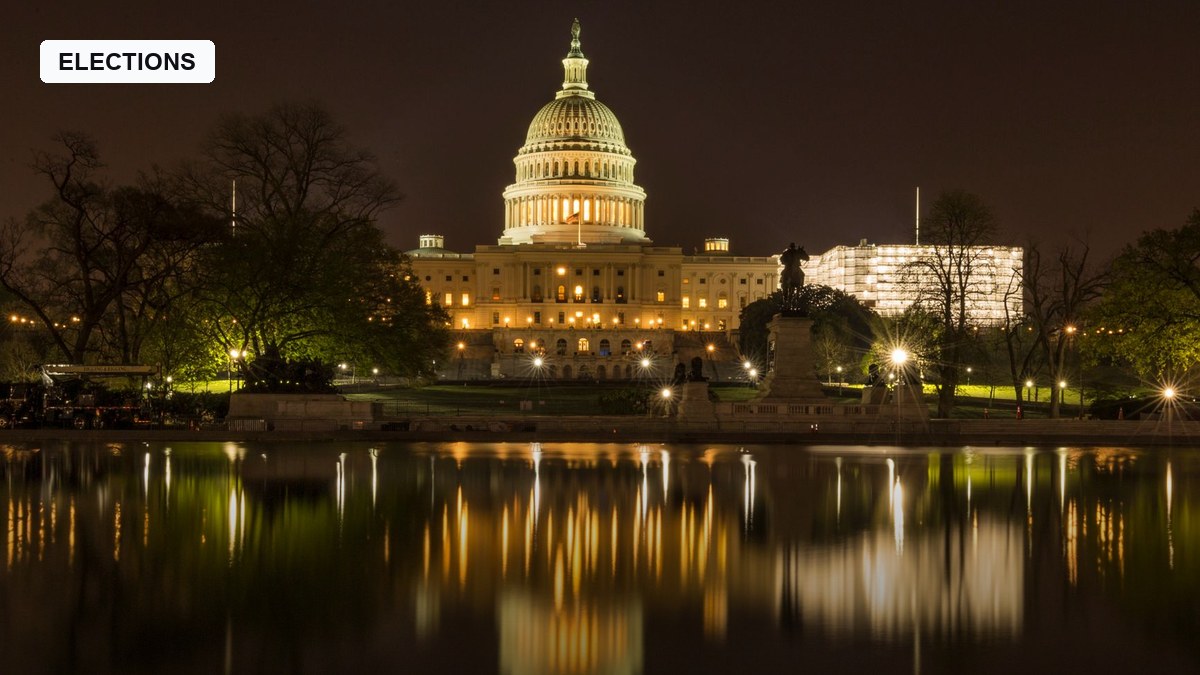
Photo: Trev W. Adams / PEXELS via Pexels