Missouri entered the November 2026 midterms using its old 2022 congressional map after the U.S. Supreme Court, in a brief unsigned order issued September 25, declined to revive a Republican-drawn replacement that Governor Mike Kehoe’s allies had pushed through the legislature at President Trump’s urging. The decision capped more than a year of litigation over a mid-decade redistricting effort aimed at flipping Democratic Representative Emanuel Cleaver’s Kansas City-area seat into Republican hands, and it means Missouri’s eight-district map looks essentially the same as it did heading into the 2024 election. The reversal was a significant setback for a redistricting push that national Republican strategists had hoped would net the party one additional safe House seat in a chamber where margins have been razor thin since 2024.
A mid-decade redraw collides with the Missouri Constitution
The Missouri Supreme Court had unanimously upheld the new GOP map in May, clearing it for an August 4 Republican primary that assumed the redrawn lines would stick. But by early September the state’s highest court reversed course, ruling unanimously that the map could not take effect for the general election because it had never been put before voters in a statewide referendum, as Missouri’s constitution requires for maps enacted outside the normal post-census cycle. The court’s September 3 order left the 2022 map in full force and effect for the November 2026 general election. Missouri’s constitution, amended by voters in a 2020 ballot measure, specifically requires that any mid-decade congressional map receive voter approval before taking effect, a provision the legislature’s 2025 map never cleared before being pushed through on a party-line vote.
Washington declines to intervene
Missouri’s Republican attorney general and national GOP groups asked the U.S. Supreme Court to step in, arguing that a state court had no business overriding a legislature’s redistricting authority so close to an election. The justices first declined on September 10 to issue emergency relief, then on September 25 turned away the case entirely without explaining their reasoning, a two-line order that effectively ended the dispute as absentee ballots were already going out to voters. Legal scholars noted that the brevity of the order, typical for emergency-docket rulings, left little guidance for other states weighing similar mid-decade redistricting efforts, meaning the underlying constitutional question of how far legislatures can push redraws between censuses remains unsettled outside Missouri’s specific facts.
What was at stake in Kansas City
The GOP-drawn map would have split Kansas City three ways, carving Democratic-leaning Jackson County into Republican-held districts in an attempt to dilute the city’s voting power enough to put Cleaver’s 5th District out of reach. Under the restored 2022 lines, Cleaver’s district remains compact and anchored in Kansas City proper, and Missouri Democrats say the ruling preserved one of their few reliably safe House seats in a state Trump carried by double digits in 2024. Cleaver, who has represented the district since 2005, has said throughout the litigation that voters, not mapmakers, should be the ones picking their representatives.
Part of a broader mid-decade redistricting fight
Missouri was one of several Republican-controlled states, alongside Texas and others, where GOP legislatures redrew congressional lines mid-decade in 2025 under pressure from the Trump White House to shore up the party’s narrow House majority ahead of the midterms. Texas succeeded in pushing its new map into effect after a federal court fight, while Missouri’s attempt stalled on a narrower, state-constitutional referendum question rather than a federal Voting Rights Act claim, a distinction legal analysts say insulated the ruling from further Supreme Court review.
Two views of the outcome
Missouri Democratic officials called the ruling a win for voters over politicians, arguing that letting the legislature bypass a referendum requirement would have set a precedent for redrawing maps whenever a party’s majority felt threatened. Republican state Senate leaders countered that the courts had overridden the will of elected lawmakers on a technicality and vowed to pursue a ballot measure asking voters to approve a new map before the 2028 cycle, arguing Missouri’s existing lines still underrepresent the state’s rightward shift since 2022.
What happens next
With the 2022 map locked in for 2026, attention shifts to whether Missouri Republicans can gather enough signatures to place a new map before voters as a ballot initiative in 2028, a process that would require winning over an electorate that has already shown resistance to mid-decade changes. For now, election officials in Jackson County say the unchanged district lines simplified an already complicated midterm cycle, sparing them the administrative scramble of redrawing precincts and voter rolls on short notice. Election directors in several other Missouri counties echoed that relief, noting that a late map change would have forced them to reprint ballots, retrain poll workers, and notify thousands of voters of new polling locations in a compressed window before Election Day.
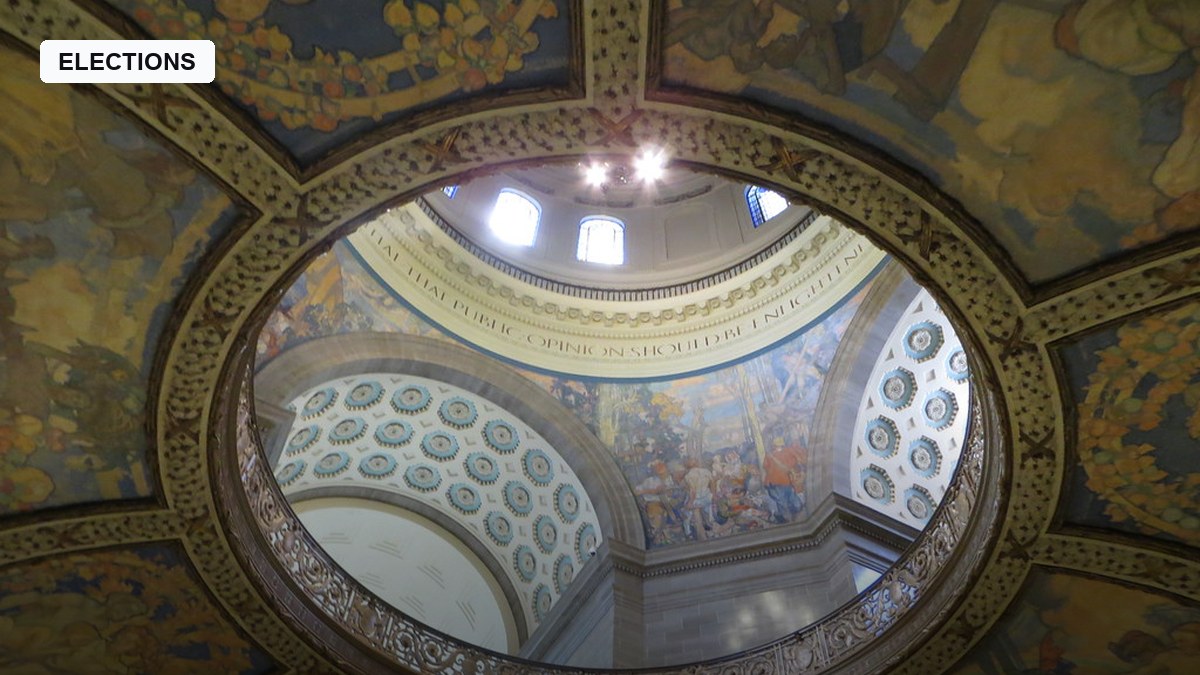
Photo: davidwilson1949 / BY via flickr