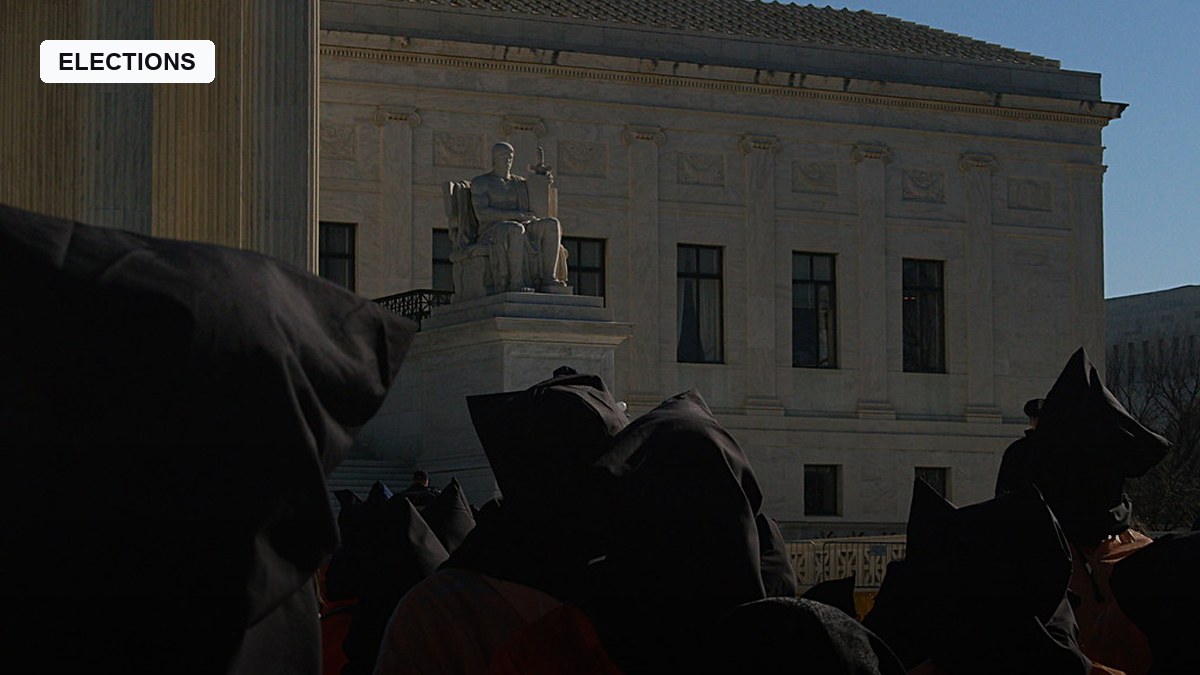
The U.S. Supreme Court has cleared Alabama to use a congressional map for the 2026 midterm elections even though a lower court found just months earlier that the map was drawn with the intent to discriminate against Black voters. The decision, issued in early June, is one of the most consequential downstream effects yet of the Court’s April 29 ruling in Louisiana v. Callais, which narrowed the reach of Section 2 of the Voting Rights Act.
How the fight began
Alabama’s map dates back to a long-running redistricting battle that began after the 2020 census. A three-judge federal panel had already found in 2023 that the state’s congressional map illegally diluted Black voting strength, a ruling the Supreme Court itself affirmed in Allen v. Milligan. That earlier decision forced Alabama to adopt a map with a second district in which Black voters had a genuine opportunity to elect a candidate of their choice. This year, however, that same three-judge panel ruled that the state’s newest map was intentionally racially discriminatory and unconstitutional under Section 2, teeing up a fresh round of appeals just as candidate qualifying deadlines approached.
Callais changes the calculus
Two days after the Supreme Court decided Callais on April 29, Alabama Gov. Kay Ivey called a special legislative session. Lawmakers convened on May 4 — one day after the six-months-before-the-election marker that courts often treat as a cutoff for changing election rules — and approved a plan reverting to congressional and state Senate maps that had previously been struck down as discriminatory. Advocates, voters and Black lawmakers objected loudly during the session, but the measure passed largely along party lines.
What the justices decided
Alabama appealed the panel’s ruling to the Supreme Court, which granted a stay allowing the state to use the 2023-style map for the 2026 election cycle while the appeal proceeds. Because the ruling came on the Court’s emergency docket, the justices did not issue a full written opinion explaining their reasoning, a practice that has drawn criticism from election-law scholars who say the shadow docket is increasingly deciding major voting-rights disputes without transparency.
Two sharply different readings
State officials frame the outcome as a vindication of Alabama’s authority to draw its own maps and of the Callais Court’s determination that partisan, rather than strictly racial, motivations do not run afoul of Section 2. Republican legislative leaders have argued the earlier map was itself an improper racial gerrymander that sorted voters primarily by race to create a second Black-opportunity district. Voting-rights groups and Democratic lawmakers counter that the panel’s specific finding — that lawmakers acted with discriminatory intent — should have been decisive regardless of Callais, and that allowing the map to stand for 2026 effectively rewards a state found to have broken the law. The Legislative Black Caucus and allied civil rights organizations have said they intend to continue pressing the underlying case even as the map is used this fall.
Ripple effects across the South
Alabama is not alone. Louisiana, Georgia and other Southern states are all recalibrating redistricting strategy in Callais’s wake, since the decision effectively lowered the bar for states defending maps against vote-dilution claims tied to partisan rather than racial motive. Election-law analysts say the practical effect is that several states will enter the 2026 midterms with maps that a court has found legally troubling but that remain in force because of scheduling and appellate timing.
What happens next
The underlying appeal on the merits remains pending, meaning the Supreme Court could still rule against Alabama after the 2026 election — a scenario that would not undo results from a map already used to elect members of Congress. For now, candidates are qualifying and campaigning under the reinstated lines, and national Democratic groups have signaled the seat could still be competitive despite the map’s structure. Civil rights lawyers say they will keep pushing for a final ruling that would govern the map used in 2028, arguing that Black voters in Alabama should not have to wait another redistricting cycle for a map a court has already found to be unlawful.
A decade-long fight over one district
The dispute traces back to the aftermath of the 2020 census, when Alabama’s Legislature drew a congressional map with only one of seven districts giving Black voters a realistic chance to elect their preferred candidate, despite Black residents making up roughly 27% of the state’s population. The Supreme Court’s 2023 decision in Allen v. Milligan forced the state to add a second such district, a map used for the 2024 election. Republican lawmakers have argued ever since that the court-ordered map itself amounted to unconstitutional race-based sorting, a position the Callais decision has now given them new legal footing to press. That back-and-forth illustrates how quickly the legal ground under redistricting law has shifted within a single presidential term, leaving both mapmakers and voters uncertain which lines will ultimately govern future elections.