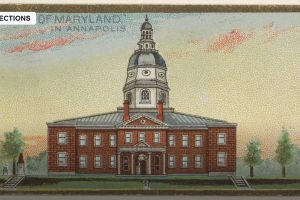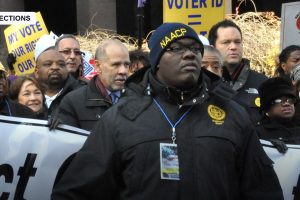
Three more states have passed their own voting rights laws this year, joining a growing list of Democratic-led states building state-level protections after the U.S. Supreme Court narrowed the federal Voting Rights Act. Delaware Governor Matt Meyer signed the John Lewis Voting Rights Act of Delaware on August 6, according to Delaware Public Media, making Delaware the twelfth state to adopt such a law. New Jersey enacted its own version on July 2, becoming the eleventh state to do so, while Maryland has also enacted new state-level protections this year, according to a September 1 roundup from Ballotpedia tracking state election legislation.
The Supreme Court Ruling That Sparked the Wave
The push accelerated after the Supreme Court’s April 29 decision in Louisiana v. Callais, a 6-3 ruling that significantly narrowed the circumstances under which a racial vote-dilution claim can be brought under Section 2 of the Voting Rights Act. Civil rights groups have described the decision as having “eviscerated” a key remaining protection of the 1965 law, warning it could open the door to more aggressive partisan and racial gerrymandering nationwide, particularly in Southern states already redrawing maps for the 2026 midterms.
What Delaware’s Law Does
Delaware’s law, formally titled House Bill 444, prohibits political subdivisions from engaging in practices that result in voter suppression or vote dilution and empowers both aggrieved individuals and the state attorney general to sue to remedy violations. It also requires local election officials to provide language assistance in jurisdictions where a threshold number of residents speak a language other than English, and directs the state’s Division of Elections to maintain a public database of election statistics to help identify patterns of disparate impact.
New Jersey and Maryland’s Parallel Moves
New Jersey Governor Mikie Sherrill signed similar legislation in July, adding the state to a bloc that now includes California, New York, Virginia, Washington, Illinois and others that adopted state voting rights acts in earlier years. Maryland lawmakers moved on companion legislation this year as well, according to Ballotpedia’s tracking of the more than 400 election-related bills states have enacted in the first seven months of 2026 alone — a pace advocates say reflects how central voting rules have become to state legislative sessions this cycle.
Republican Pushback
Republican officials in several of these states have criticized the new laws as an attempt by Democratic legislatures to preempt federal court rulings and create parallel legal exposure for local governments over routine election administration decisions. Critics argue the laws could invite a flood of litigation against county election boards over decisions as minor as polling place placement, and that state attorneys general could use their new enforcement powers in politically selective ways.
The View From Civil Rights Advocates
Supporters counter that state-level laws are now the only reliable backstop against vote dilution given the Supreme Court’s posture, and note that similar laws already in effect in states like Virginia have been used to block redistricting maps and polling place closures that disproportionately affected minority voters. The Legal Defense Fund and other groups tracking the trend say they expect additional states to introduce comparable legislation in 2027 sessions regardless of the outcome of the midterms, pointing to momentum in states such as Minnesota and Michigan where similar bills have already been introduced but not yet passed.
How the Laws Differ From One Another
Although often grouped together, the twelve state-level voting rights acts enacted so far are not identical. Some, including Virginia’s and now Delaware’s, include a preclearance-style requirement forcing certain jurisdictions with a documented history of discrimination to seek approval before changing voting procedures, while others rely more heavily on after-the-fact private lawsuits. New Jersey’s version leans more on private enforcement, giving individual voters and organizations broad standing to sue, while Maryland’s approach places greater emphasis on language-access mandates for growing immigrant communities within the state.
What’s Next
With Delaware’s law already partially in effect and New Jersey’s provisions being phased in, attention now turns to how quickly advocacy groups will test the new statutes in court, potentially against local jurisdictions accused of vote dilution ahead of November’s elections. Legislators in Maryland are expected to finalize remaining implementation details this fall, while national voting rights organizations say they are lobbying additional state legislatures to take up similar bills before the 2027 legislative calendar begins.