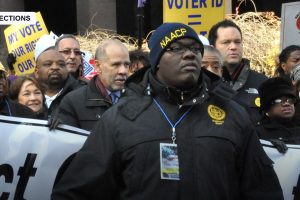
Backers of a California ballot initiative that would require voter identification, known as Proposition 39, have filed suit against Secretary of State Shirley Weber and Attorney General Rob Bonta, arguing the state altered the measure’s official ballot summary in a way that unfairly biases how voters will understand it in November.
What Proposition 39 would do
If approved, the measure would require California voters to show a government-issued photo ID at the polls, or provide the last four digits of a government-issued ID number when voting by mail. California currently does not require ID to vote, a policy voter ID supporters argue leaves the system more vulnerable to impersonation fraud, however rare, than most other states.
Supporters gathered signatures for the measure over the past year, framing it as a modest, widely used safeguard already in place in a majority of states, including some with Democratic-controlled legislatures, and arguing that pairing an ID requirement with the last-four-digits option for mail voters minimizes any burden on voters who lack a physical ID card readily available. Opponents of the underlying policy, separate from the wording dispute itself, argue California’s existing signature-verification system for mail ballots already provides adequate identity assurance without adding a new documentary requirement.
The dispute over wording
Republican Assemblyman Carl DeMaio, the measure’s lead backer, argues that changes Bonta’s office made to the official ballot label and summary emphasize potential burdens on eligible voters while downplaying the measure’s stated security goals, effectively tilting how undecided voters will interpret the initiative before they read the full text. State officials have defended the language as an accurate, neutral description consistent with the office’s standard practice for characterizing ballot measures, a practice that has separately been challenged and upheld in other recent California ballot fights.
Echoes of past disputes
The fight resembles an earlier 2026 dispute in which the Arizona Supreme Court upheld Secretary of State Adrian Fontes’ ballot language for a similar voter ID measure, Proposition 144, after Republican critics made comparable claims of biased wording. That precedent, while not binding in California, is likely to feature in arguments from both sides.
Broader stakes for the measure
Voter ID has become one of the most closely watched ballot questions nationally in 2026, with California’s decision, should the measure pass, marking a significant shift for one of the largest states that currently has no ID requirement at all. Opponents of Proposition 39, including several voting rights organizations, argue that even neutral-sounding ID requirements disproportionately burden low-income, elderly and disabled voters who are less likely to have current government identification readily available.
What’s next
A state appellate court is expected to rule on the ballot-language dispute before county elections officials finalize ballot printing this fall, since any court-ordered change to the wording would need to happen well ahead of the November election. Whatever language survives will likely shape public perception of the measure in the campaign’s final stretch.
DeMaio’s campaign has pointed to polling suggesting that voter ID requirements poll well even among some Democratic-leaning voters when described neutrally, which supporters say is precisely why they believe the state’s chosen wording, which emphasizes potential impacts on eligible voters lacking ID, was crafted to depress support rather than simply inform it. Bonta’s office has rejected that characterization, noting that California’s ballot label and summary process for all measures, not just Proposition 39, is handled through a standardized nonpartisan drafting procedure within the attorney general’s office.
The fight also intersects with a broader national debate about how neutral, in practice, official ballot summaries can ever be for measures touching politically charged topics like voter identification. Political scientists who study ballot-measure wording note that even small changes in phrasing, such as leading with a measure’s requirements versus its stated purpose, have been shown in academic studies to shift support levels by several percentage points in close elections, making the stakes of this seemingly technical wording dispute far from trivial for a measure expected to be decided by a narrow margin.
County registrars across California, who will ultimately have to implement Proposition 39 if it passes, say they are already modeling logistical scenarios for how an ID requirement would affect polling place operations and mail-ballot processing, work that must proceed in parallel with the ongoing ballot-language litigation regardless of which way the wording dispute is ultimately resolved.
Photo: Ken Lund / BY-SA via flickr