Alaska voters will decide this November whether to repeal the state’s top-four ranked-choice voting system, a measure that would also eliminate campaign finance disclosure provisions designed to limit dark money in Alaska elections, setting up one of the most closely watched election-reform fights on any 2026 statewide ballot.
What the Measure Would Do
The Repeal Top-Four Ranked-Choice Voting Initiative would dismantle the system Alaska voters narrowly approved in 2020, which combined a nonpartisan top-four primary with a ranked-choice general election. Because the original 2020 measure bundled voting-method reform together with new campaign finance disclosure requirements aimed at curbing anonymous political spending, repealing it would also strip out those dark-money disclosure rules, an aspect of the repeal effort that has drawn less attention than the ranked-choice fight itself but carries significant consequences for transparency in Alaska campaigns.
The Case for Repeal
Repeal supporters, including some Republican officials who argue the system has produced confusing ballots and unpredictable outcomes, say ranked-choice voting is overly complicated for voters and has occasionally allowed candidates to win with less than a majority of first-choice support in ways they consider illegitimate. They argue a return to traditional party primaries and a simple plurality general election would restore clarity and reduce voter confusion, pointing to Alaska’s relatively low turnout in some ranked-choice contests as evidence the system may be suppressing participation rather than expanding choice.
The Case for Keeping the System
Defenders of the current system, including a broad coalition of good-government groups, argue that ranked-choice voting has functioned as designed, allowing more moderate candidates to win in a state with a large bloc of independent voters, and that repeal is being pushed largely by partisan interests unhappy with specific election outcomes rather than genuine concerns about voter confusion. They also warn that eliminating the measure’s dark-money disclosure requirements would be a significant step backward for transparency, effectively allowing anonymous spending to flow more freely into Alaska races just as such spending is surging nationally.
National Context for Ranked-Choice Voting
Alaska’s repeal fight is part of a broader mixed national trend on ranked-choice voting this cycle. Historically, roughly five out of six statewide ranked-choice ballot measures have favored adoption rather than repeal, but Alaska would become a notable exception if repeal succeeds, joining a small number of jurisdictions that have rolled back the system after implementation. Meanwhile, other states, including Michigan, are moving in the opposite direction, with a Board of Canvassers-approved initiative to adopt ranked-choice voting statewide advancing toward the 2026 ballot there.
The Dark-Money Dimension
Campaign finance watchdogs say the bundling of ranked-choice repeal with dark-money disclosure repeal is a strategic choice that could obscure the transparency stakes for voters focused primarily on the voting-method question. With federal campaign finance enforcement effectively paralyzed by a nonfunctional Federal Election Commission, state-level disclosure laws like Alaska’s have become an increasingly important backstop against anonymous political spending, making the potential rollback especially significant to national dark-money trackers.
What’s Next
Both sides are expected to spend heavily in the run-up to November, with national ranked-choice voting advocacy groups likely to funnel resources into Alaska to defend the 2020 reforms. Should the repeal succeed, Alaska would need to revert to its prior primary and general election system for the 2028 cycle, and campaign finance transparency advocates say they will be watching closely to see whether state lawmakers move to preserve dark-money disclosure rules separately even if the broader ranked-choice system is repealed.
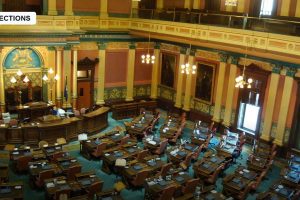
Photo: The Alaska Landmine / BY via flickr