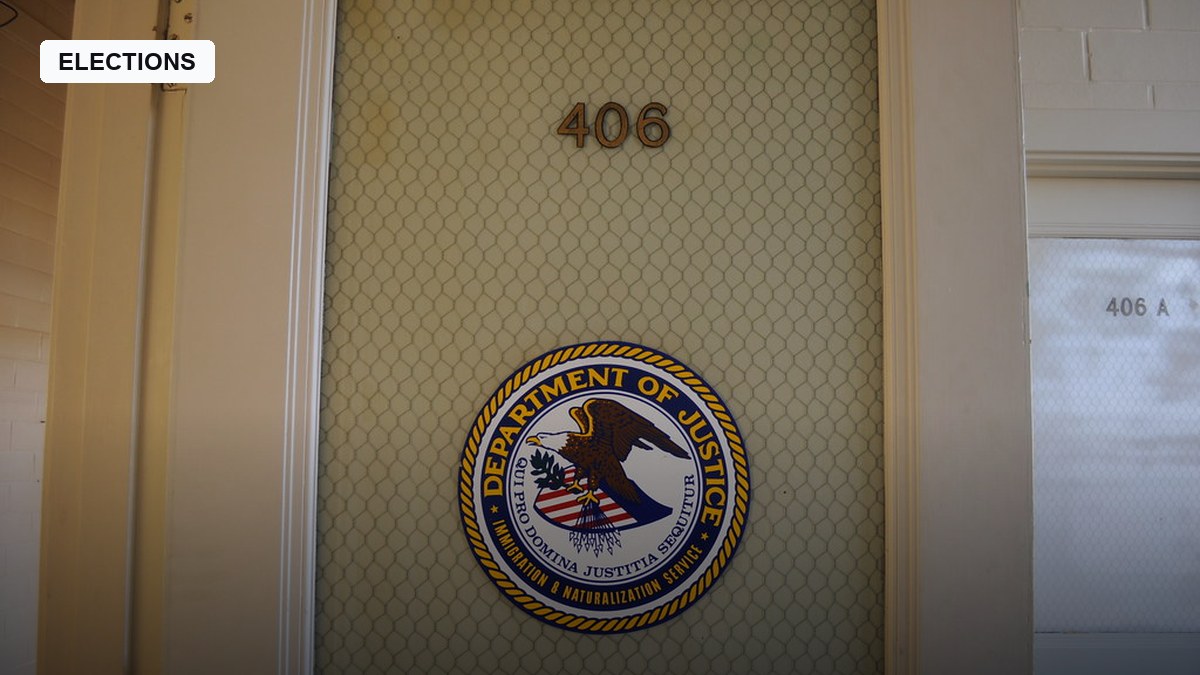
The Justice Department has sent letters to dozens of state and local election officials warning they could face criminal prosecution if noncitizens are found to have voted in the upcoming midterms, a sharp escalation in the Trump administration’s scrutiny of local election oversight nationwide.
What the letters say
Assistant Attorney General Harmeet Dhillon’s letters warn election officers that they could be held criminally liable if they knowingly retain noncitizens on a state’s voter rolls or facilitate noncitizens in receiving and casting ballots. Officials were given roughly five days to respond detailing how their jurisdictions comply with long-standing federal laws that already prohibit noncitizen voting.
The letters went out to a broad cross-section of jurisdictions spanning both Democratic and Republican-led states, according to officials who received them, suggesting the campaign was not targeted narrowly at specific states seen as politically hostile to the administration but instead represented a nationwide baseline demand for documented compliance, a scope that some recipients said made the tight five-day response window especially burdensome for smaller election offices without dedicated legal staff on hand to draft a formal reply.
Existing safeguards already in place
Every state has procedures designed to prevent noncitizens from registering or voting, including citizenship attestations on registration forms and, increasingly, cross-checks against federal immigration databases. Voting by noncitizens in federal elections has consistently been documented as exceedingly rare in independent studies and state audits conducted over the past two decades.
How officials are responding
Election officials in Washington state and elsewhere who received the letters say the demands read more like political pressure than a genuine prosecutorial roadmap, since compliance with existing citizenship-verification rules is already standard practice in nearly every jurisdiction. Some officials have nonetheless hired outside legal counsel to prepare formal responses, wary of the reputational and legal risk of appearing noncompliant even absent any actual violation.
The political context
The letters follow recommendations laid out in Project 2025, which called for the incoming administration to shift federal resources toward investigating and prosecuting voter-registration fraud, and come amid a broader pattern of DOJ actions this year, including the sweeping voter-roll lawsuits filed against 29 states, that critics say together represent an unusually aggressive federal posture toward state-run elections.
Weighing the risk
Supporters of the DOJ’s approach argue that clear warnings and accountability measures deter any potential noncitizen voting and reassure the public that federal law is being enforced uniformly. Critics, including several election law scholars, counter that threatening criminal prosecution against officials for a problem with no documented scale in their jurisdictions risks chilling normal election administration and could discourage qualified people from serving as election officials at all.
What’s next
Several state attorneys general are reviewing whether the letters constitute an improper federal intrusion into state election administration and could form the basis of a legal challenge. In the meantime, election officials say they are documenting their existing compliance procedures in detail, both to respond to DOJ and to have a record in hand should the threatened prosecutions ever materialize.
The letters have also reignited debate over the practical mechanics of citizenship verification at the point of registration. Most states rely on a signed attestation under penalty of perjury when a person registers to vote, supplemented in some states by cross-checks against Department of Motor Vehicles or federal immigration databases; election administrators note that requiring documentary proof of citizenship at registration, an approach some Republican-led states have pushed to adopt, would represent a significant departure from that longstanding system and could, according to voting rights groups, inadvertently disenfranchise eligible citizens who lack easy access to birth certificates or passports.
Several current and former election officials, including some who have publicly described themselves as politically independent, said the letters have compounded an already difficult environment for retaining experienced election staff, many of whom have left the profession in recent years citing burnout, threats and increased political scrutiny following the 2020 election cycle. Recruiting and retaining qualified replacements, they say, becomes harder still when the job itself now carries the added specter of personal criminal liability over compliance questions that, in the vast majority of jurisdictions, were never in serious dispute to begin with.
Dhillon’s office has defended the tight response window as necessary given the approaching midterm timeline, arguing that any genuine compliance gaps need to be identified and corrected well before ballots are printed rather than discovered after the fact, a rationale that state election directors say they understand in principle even as many argue the underlying compliance concerns are, in most jurisdictions, effectively hypothetical.
Photo: Joe Mabel / BY-SA via flickr