California’s November ballot will include a first-of-its-kind statewide voter ID and citizenship-verification measure, and a new poll suggests the fight over Proposition 39 is far closer than either side expected in a heavily Democratic state. A Berkeley Institute of Governmental Studies survey released this month found 51% of Californians opposed to the measure and 42% in favor, numbers that have both campaigns recalibrating with roughly nine weeks left before Election Day.
What Proposition 39 would do
Proposition 39, the Voter Identification, Citizenship Verification and Registered Voter List Administration Initiative, would amend the state constitution to require proof of citizenship to register to vote, a government-issued photo ID to vote in person, and the last four digits of a government-issued ID number printed on the outside of mail ballots. The measure would also require the state to issue free voter ID cards on request to residents who lack another qualifying form of identification.
The measure qualified for the ballot in late April after its backers, San Diego-area Assemblymember Carl DeMaio, state Sen. Tony Strickland and businessman Donald DiCostanzo, submitted more than 1.3 million signatures, well above the 874,641 valid signatures required. Organizers have said nearly half of those signatures came from registered Democrats and independents, evidence they argue shows the issue cuts across party lines even in a state Trump lost badly in the last two presidential elections.
A fight over the ballot title itself
Before the campaign over the substance of Prop 39 even began in earnest, the two sides fought over how it would be described to voters. Attorney General Rob Bonta’s office issued an official ballot title and summary that DeMaio said replaced more neutral, favorable language his campaign had expected, and he filed suit accusing Bonta of rewriting the description to damage the measure’s chances at the polls. Sacramento County Superior Court Judge Jennifer K. Rockwell rejected that challenge, ruling Bonta’s title and summary fell within the attorney general’s discretion and accurately described the initiative’s legal effect. A second, related lawsuit over ballot materials was also decided in Democrats’ favor, according to court filings reviewed by local outlets.
The campaigns take shape
Governor Gavin Newsom and state Democratic Party leaders have launched a coordinated opposition campaign that explicitly ties Prop 39 to President Trump and his administration’s separate, more aggressive push for stricter voter ID and mail-ballot rules nationally. Democratic strategists argue that framing is deliberate: linking a state ballot measure to an unpopular national figure has proven effective in past California initiative fights, and early polling shows the measure performing worst among women under 40, Black voters and voters in union households.
DeMaio and Reform California, the group backing the measure, counter that voter ID is broadly popular even among Democratic and independent voters nationally, and that California is now one of the few remaining states without any ID requirement at the polls. They point to the volume of Democratic and independent signatures gathered as evidence that the opposition’s partisan framing will not hold up once voters focus on the measure’s actual text rather than campaign messaging.
How California compares nationally
If approved, California would join a growing list of states tightening voter identification and citizenship-verification rules ahead of the midterms; strict photo ID requirements are already in place in states including Georgia, Indiana, Kansas, Mississippi, Tennessee and Wisconsin. California would also join five other states, including Arkansas, Kansas and South Dakota, where voters this November are deciding separate constitutional amendments explicitly barring noncitizens from voting in state and local elections, part of a second wave of similar measures that began in 2018 and has passed in all 15 previous instances put before voters nationally.
What to watch before November
With the Berkeley poll showing a nine-point gap that falls within a plausible range for late movement, both campaigns are expected to spend heavily in the campaign’s final stretch, and additional public polling is likely as Election Day nears. Election administrators in California’s 58 counties say they are also preparing contingency guidance in case the measure passes, since implementation would require significant changes to voter registration systems and in-person check-in procedures statewide by the following election cycle. Whichever way Prop 39 breaks, both sides agree the result will be closely watched nationally as a test of whether voter ID measures can succeed in a state as reliably Democratic as California.
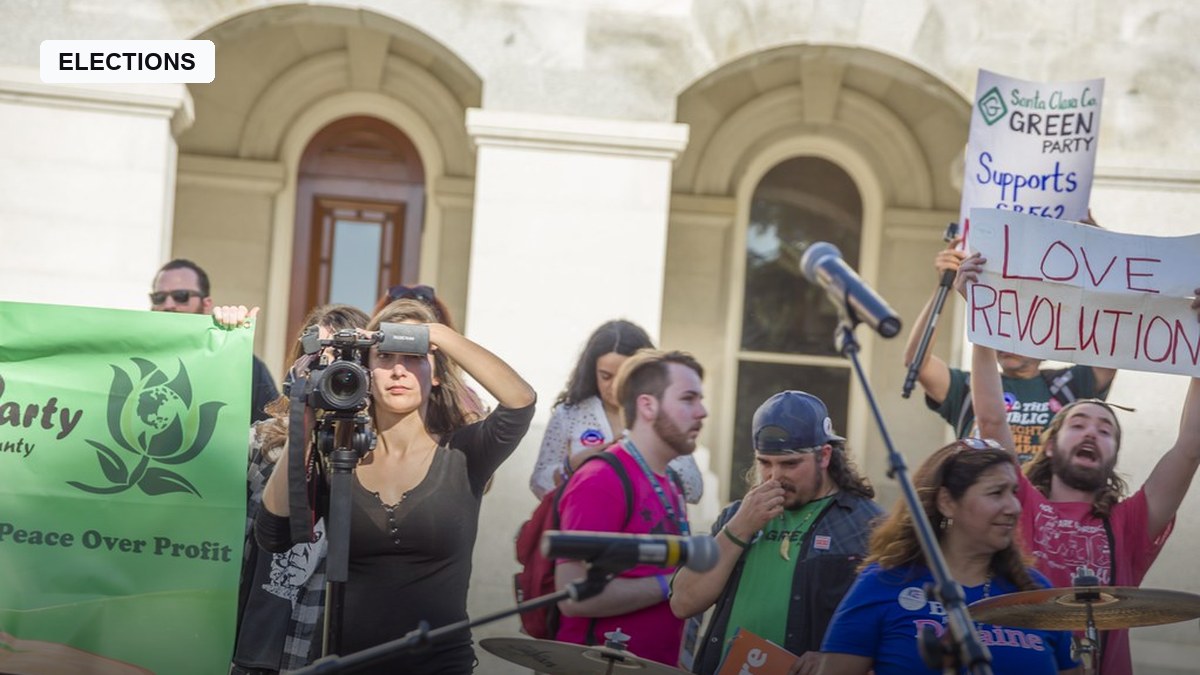
Photo: Bob Dass / BY via flickr