Democrat Eileen Laubacher has unseated Republican Rep. Lauren Boebert in Colorado’s 4th Congressional District, flipping the state’s most reliably conservative House seat after the Associated Press called the race on a Friday afternoon with roughly 99% of ballots counted. The final count showed Laubacher ahead 48.8% to 47.9%, a margin of under one percentage point, ending Boebert’s three-term run in Congress even as her campaign signaled it was not ready to concede. The outcome capped a count that stretched roughly ten days past Election Day, with Laubacher’s lead narrowing somewhat as rural counties finished tabulating but never disappearing entirely.
A Retired Admiral’s Upset Bid
Laubacher, 58, a retired Navy rear admiral with 34 years of military service and a former National Security Council official, was a first-time candidate who lives in Highlands Ranch. Her campaign raised nearly $14 million through mid-October, dwarfing Boebert’s roughly $1.2 million, and outside groups spent heavily against the incumbent, including roughly $1.5 million tied largely to ads referencing a widely publicized incident from Boebert’s past. “This campaign was never about party labels,” Laubacher said after the race was called. “It was about putting people first.” She has already traveled to Washington for orientation for incoming members of Congress. Laubacher’s campaign leaned heavily on her military resume, casting her as a steady, nonpartisan alternative in a district where Boebert’s national profile had become as much a liability as an asset among swing voters.
Boebert’s Campaign Alleges Irregularities
Boebert’s campaign has not conceded and has raised unspecified concerns about the vote count. Campaign attorney Scott Gessler, a former Colorado secretary of state, said the campaign was “investigating some very unusual voting patterns and expect this election to head to a recount, one way or another,” though he did not detail the patterns or present evidence of wrongdoing, and the campaign has not formally contacted the secretary of state’s office about the claims. Boebert herself struck a more measured tone in an interview with Colorado Public Radio, saying, “We’ll see what happens Friday and we’ll accept whatever outcome is presented,” while maintaining the race was not yet over. Gessler, himself a former Colorado secretary of state, has previously echoed debunked claims of widespread fraud in the 2020 presidential election, a history that has colored how some election-law observers view his campaign’s unspecified allegations in this race.
Election Officials Push Back
Colorado Secretary of State Jena Griswold, a Democrat, rejected the implication that the count was mishandled. “Colorado’s elections are safe, secure and accurate — and every voter’s voice will be heard,” Griswold said, with her office noting that ballots were being processed in line with state and federal law. Under Colorado law, an automatic recount is triggered only when the margin is 0.5% or less of the winner’s total; Laubacher’s roughly 0.9-point lead falls outside that threshold, meaning Boebert’s campaign would need to request and personally finance any recount. Colorado law allows a candidate or political organization to request and pay for a recount regardless of margin, but the cost of hand- or machine-recounting roughly 380,000 ballots across 21 counties would fall entirely on the campaign requesting it, a financial hurdle for a candidate who was significantly outraised this cycle.
A District Built for Republicans
Colorado’s 4th District, anchored by Douglas County and stretching across the state’s Eastern Plains, is one of the most Republican-leaning seats in the country; Donald Trump carried it by more than 18 points in 2024. Boebert, 39, moved to the district in 2024 after narrowly surviving a 2022 reelection bid by fewer than 600 votes in her previous 3rd District seat, winning the 4th District by 11 points that year. Laubacher carried the district’s population centers, including Douglas, Larimer and Arapahoe counties, while Boebert held on to most of the smaller rural counties. Outside spending reflected how competitive the race had become relative to expectations: roughly $1.5 million went toward ads opposing Boebert, much of it tied to a widely publicized 2023 incident at a Denver theater performance of “Beetlejuice,” while only about $600,000 supported her directly.
Part of a Broader Colorado Shift
The 4th District flip was one of three Colorado House seats Democrats picked up this cycle, alongside Manny Rutinel’s defeat of Republican Rep. Gabe Evans in the 8th District and Jessica Killin’s win over Republican Rep. Jeff Crank in the 5th District. If Laubacher’s win holds, Colorado’s congressional delegation would stand at seven Democrats to one Republican, leaving Rep. Jeff Hurd as the lone Republican left in the state’s House delegation. National forecasters had shifted the 4th District race to “leans Republican” in the race’s final week, making the eventual Democratic win one of the more significant upset calls of the broader 2026 House cycle.
What Happens Next
Colorado counties have until November 25 to complete their review and certify results, a deadline that will formalize Laubacher’s win absent a successful recount challenge. Boebert, who was among the House Republicans who voted against certifying the 2020 presidential election results during her first days in office, now faces a decision about whether to pursue a costly, self-funded recount in a race where her own margin of defeat sits well outside the threshold that would trigger one automatically.
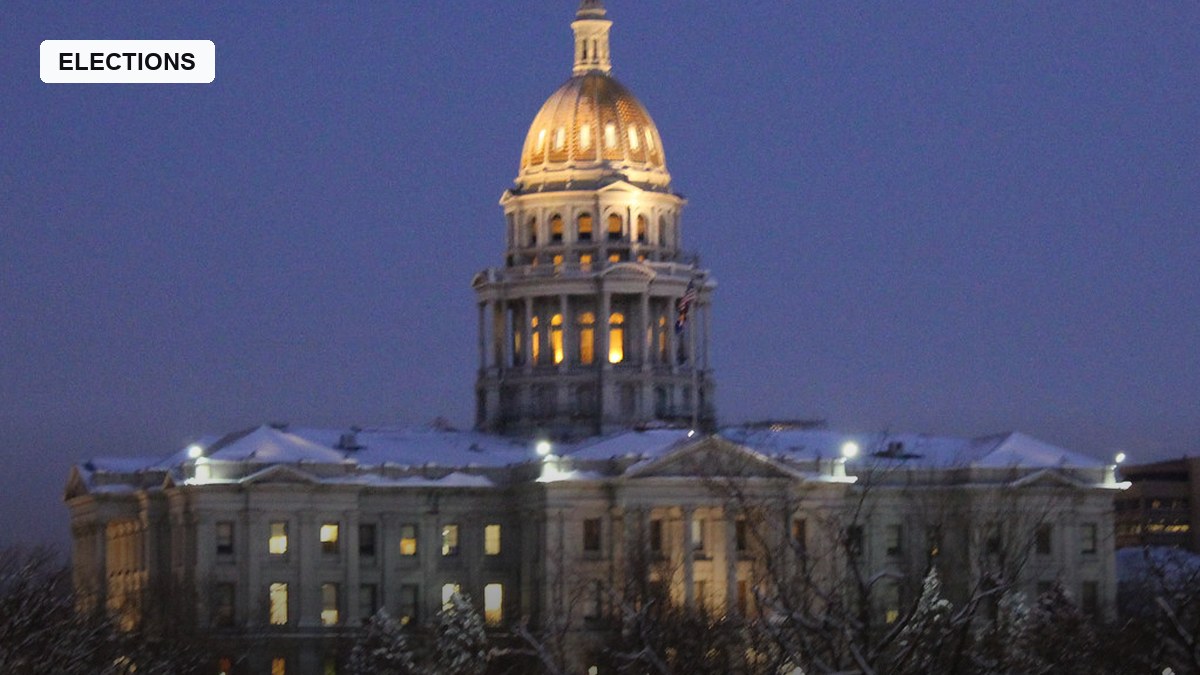
Photo: Jeffrey Beall / BY-SA via flickr