
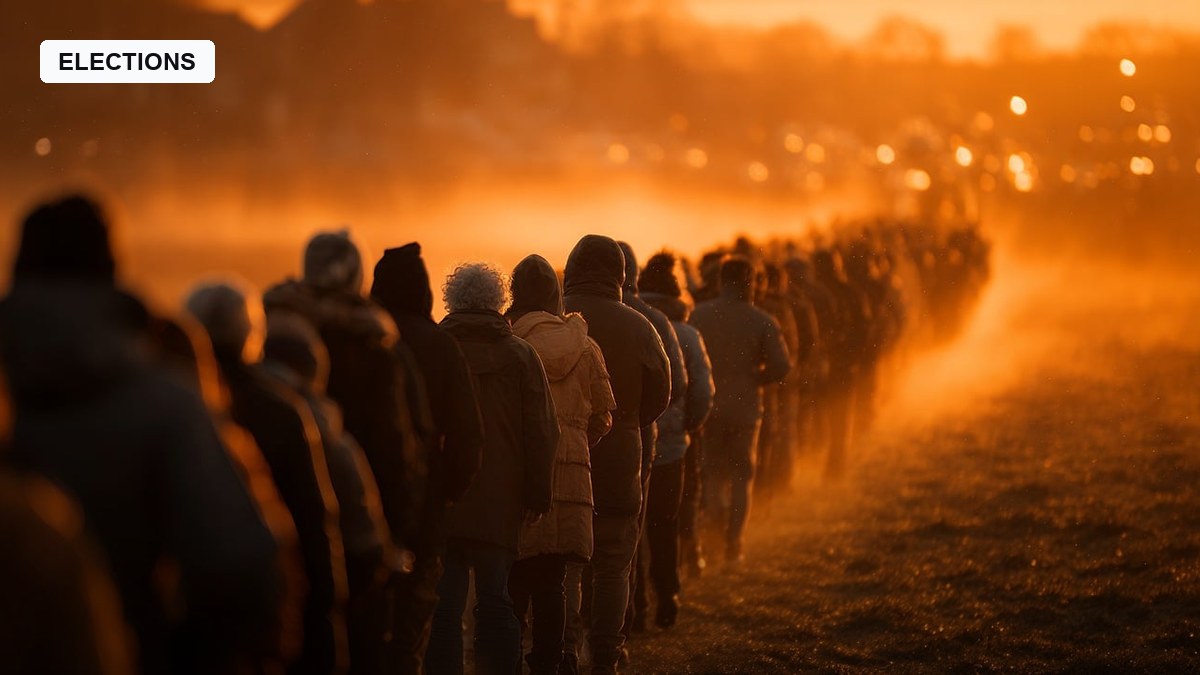
Georgia’s opening day of early voting drew 134,045 voters according to initial tallies, with a later, more complete count putting the figure at 188,667 ballots accepted on day one, nearly double the comparable first-day turnout from the 2018 midterm election cycle. The surge continues a pattern of consistently elevated early voting participation in Georgia that has made the state one of the most closely watched turnout barometers of the entire 2026 election cycle.
Why Georgia’s Early Voting Numbers Carry Outsized Significance
Georgia has emerged as one of the nation’s most closely contested battleground states over the past several election cycles, meaning any shift in its early voting patterns draws intense scrutiny from both parties’ data teams looking for early signals about the state’s competitive Senate and gubernatorial races. The state’s relatively robust public reporting of early voting data, broken down by county, race and in some cases party registration, has made it a particularly rich data source for analysts trying to forecast turnout patterns before Election Day.
How This Compares to Georgia’s Recent Election History
Georgia’s early voting surge builds on a pattern established over the past several election cycles, in which the state has consistently seen rising early and mail voting participation following the expansion of early voting infrastructure and the heightened national political attention the state has received since becoming a presidential battleground. That sustained upward trend makes isolating the specific causes of any single cycle’s surge more difficult, since structural and awareness factors compound with any given election’s unique competitive dynamics.
What County-Level Data Reveals
Early reporting suggests the turnout surge has been broadly distributed across both traditionally Democratic-leaning urban and suburban counties and more Republican-leaning rural areas, though detailed county-by-county breakdowns will likely reveal more granular patterns once election officials release comprehensive data closer to Election Day, allowing a clearer picture of whether the surge favors either party disproportionately.
The Competitive Races Driving Turnout
Georgia’s ballot in 2026 includes competitive races for governor and other statewide offices, contests that political scientists believe are likely contributing meaningfully to the elevated turnout given how much sustained media attention and campaign spending these races have attracted throughout the year. High-profile, closely contested races have historically correlated with higher overall turnout across both early and Election Day voting.
How Campaigns Are Responding to the Early Numbers
Both parties’ Georgia campaign operations have reportedly accelerated get-out-the-vote efforts in response to the strong early turnout, with some strategists viewing the surge as validation of their mobilization strategies while others caution against drawing firm conclusions about which party benefits until more detailed demographic data becomes available.
What Election Officials Have Said
Georgia election officials have generally framed the early voting surge as a positive sign for democratic participation broadly, while declining to offer any partisan interpretation of what the numbers might mean for specific race outcomes, consistent with the nonpartisan stance election administrators typically maintain throughout the voting period.
What Comes Next in Georgia’s Early Voting Window
With early voting continuing through the final days before November 3, Georgia’s turnout figures will remain one of the most closely tracked data points nationally, offering an ongoing real-time signal of voter engagement in a state whose statewide races could meaningfully shape the broader national political landscape heading into 2027.
How National Observers Are Interpreting the Trend
Political analysts outside Georgia have pointed to the state’s turnout figures as a potential bellwether for broader Sun Belt voting patterns, given Georgia’s demographic similarities to other rapidly growing, increasingly diverse battleground states that have become central to both parties’ long-term electoral strategies beyond this single election cycle. A strong showing for either party in Georgia specifically could influence how national strategists allocate resources and attention to similar demographic coalitions elsewhere in future cycles.
The Logistics Behind Managing Record Turnout
County election officials across Georgia have had to rapidly scale staffing and polling infrastructure to accommodate the unexpectedly high early turnout, a logistical challenge that has occasionally produced longer-than-anticipated wait times at some locations even as officials have generally reported the overall voting process running smoothly despite the elevated volume. State election officials have said they are prepared to deploy additional staff to high-volume locations if turnout continues at its current elevated pace through the remainder of the early voting period. Officials say contingency staffing plans remain ready if needed.
Photo: Vilkasss / PIXABAY via Pixabay
