Few 2026 contests carry more weight than the one created by a single retirement. Democratic Senator Gary Peters’s decision to step down leaves Michigan with an open Senate seat — and turns a perennial swing state into one of the cycle’s most tantalizing, and consequential, battlegrounds.
Why open seats matter
Open seats are where Senate majorities are made and lost. Without an incumbent’s name recognition and fundraising advantage, the field resets, both parties pour in resources, and the contest becomes a true toss-up shaped by candidate quality and the national mood. In a closely divided Senate, an open seat in a purple state is exactly the kind of race that can tip control.
The stakes in the math
The numbers make Michigan pivotal. Republicans hold the Senate 53-47, and Democrats need a net gain of four seats to retake it. To even have a chance, Democrats must hold their own vulnerable seats — and an open Michigan, without the incumbent Peters defending it, is harder to keep than it would otherwise be. A loss here would deepen the hole; a hold keeps the path alive.
A genuine battleground
Michigan has a habit of close, unpredictable statewide races, swinging between the parties in recent cycles. That makes the open seat a true coin-flip that will attract enormous national attention and spending. Both parties see opportunity: Democrats to demonstrate strength in the industrial Midwest, Republicans to flip a seat and pad their majority.
The national climate
The backdrop favors Democrats nationally — they lead the generic ballot by around six to seven points, and presidential approval is soft — which could help them defend turf like Michigan even without an incumbent. But state-level dynamics, candidate recruitment and turnout often override the national picture in a single race, so the open seat remains genuinely uncertain.
Why it matters
Whoever wins Michigan’s open seat does more than represent one state — they could determine which party controls the Senate, and with it the fate of legislation, judicial confirmations and oversight. That is why a single retirement in Lansing reverberates all the way to Washington.
The bottom line
Gary Peters’s retirement has handed 2026 one of its marquee races: an open Michigan Senate seat in a true swing state, with control of the chamber potentially in the balance. Expect a flood of money, attention and intensity — because in the fight for the Senate, Michigan may be the seat that decides it all.
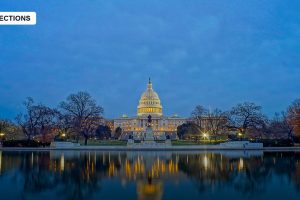
Photo: MittenStatePhototog / BY via flickr